
Designing with Nature, Living with Purpose: Key Perspectives on Architecture (and Life) with Dato' Dr. Ar. Ken Yeang
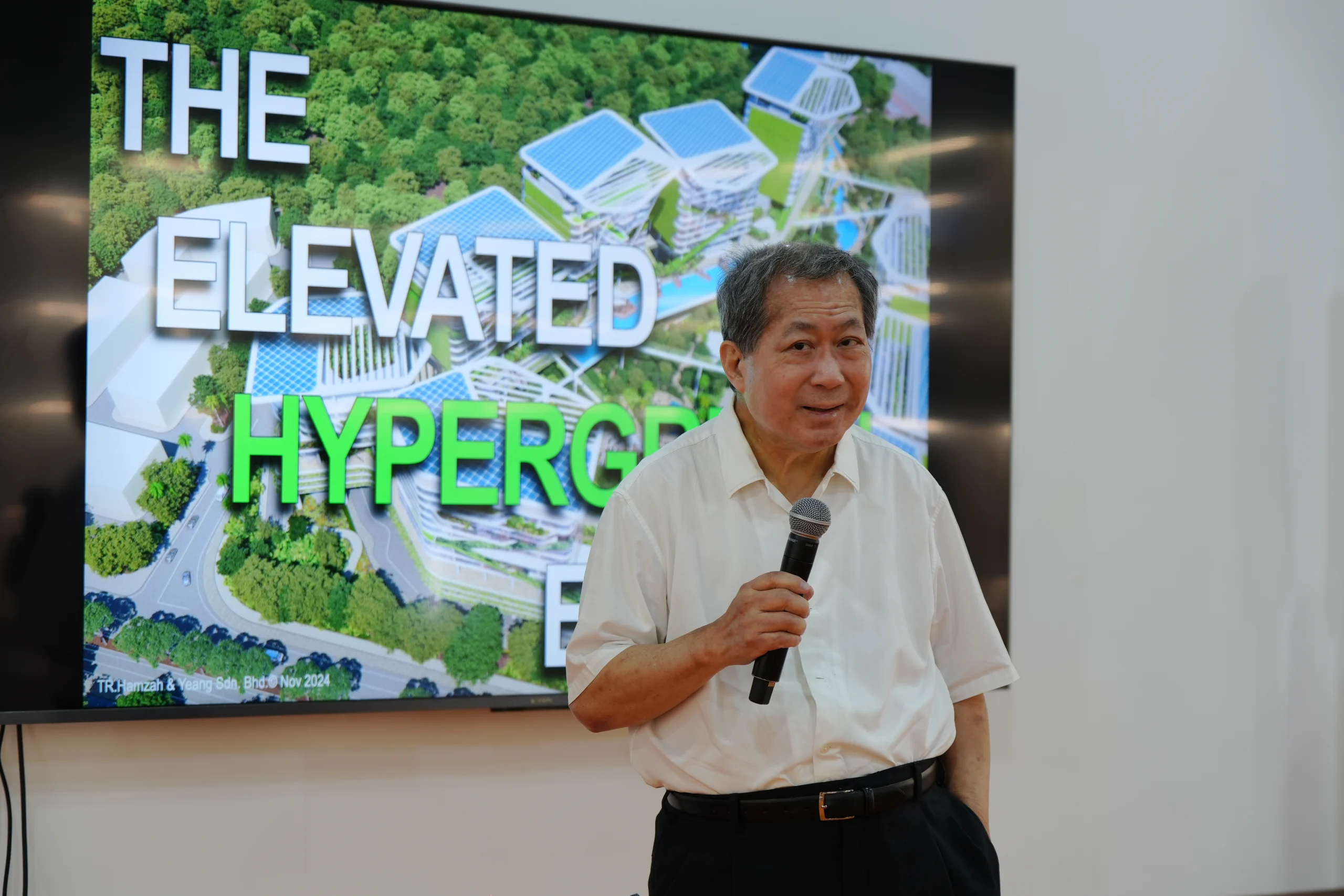
When you think of pioneers in sustainable architecture, Dato’ Dr. Ar. Ken Yeang’s name towers among them both literally and philosophically. But what sparked his lifelong journey into ecological design wasn’t a grand calling. It was rebellion.
“I became and architect because my father wanted me to become a doctor,” he says, with a chuckle.
That twist of fate led him from Penang to London, where he studied at the Architectural Association (AA) School. After graduating, he joined a friend to work on a building designed to be completely off-grid. That project profoundly shape his worldview. “I became obsessed with it,” Yeang recalls. “That experience became the basis for my thesis.”
That thesis, completed during his PhD at the University of Cambridge, would later be published as Designing with Nature — now a foundational text in ecological architecture.
Since then, Yeang has devoted over five decades to redefining how we think about buildings, cities, and our relationship with nature. His signature “bioclimatic skyscrapers” — high-rises designed to work with the climate rather than against it — have earned international acclaim, making him one of the earliest and most persistent voices in sustainable urban design.
Yeang’s legacy is built not just on unconventional structures and city plans, but on a philosophy that sees architecture as part of a larger living system. “When you look out the window at a patch of grass, it’s not just a patch of grass – it’s an entire ecosystem,” he says. “Eco-literacy should be a core part of the architectural curriculum, but sadly, it’s still missing.”
His view is radical yet simple: architects must first understand nature before they can design in harmony with it.
He also stresses the need for architects to become entrepreneurs, not just creatives. “Students do well in school, but once they step into the real world, many fail, and they’re afraid to try again. Schools should teach them how to run a business and be resilient. There’s a difference between doing things intuitively and applying a structured approach,” he says.
Today, in the face of climate change and net-zero aspirations, his ideas have never been more relevant. Even with his vast global influence, Yeang remains deeply invested in the future of Malaysian design. His message to the next generation is urgent yet hopeful: combine ecological intelligence with practical knowledge. That, he believes, is how architecture can lead the way to a net-zero future.